AIM – To analyse whether or not Football at Rugby School was created there.
It is widely accepted that Rugby Union is descended from Football at Rugby School, with the earliest accepted point of origin being the William Webb Ellis event. Therefore, we need to look at the origin of Football at Rugby School to decide as to whether this is also the origin of Rugby Union.
The earliest accepted record of Football at Rugby School is in the book ‘Macready’s Reminiscences and Selections from his Diaries and Letters’, edited by Sir Frederick Pollock Bart and published in 1875.
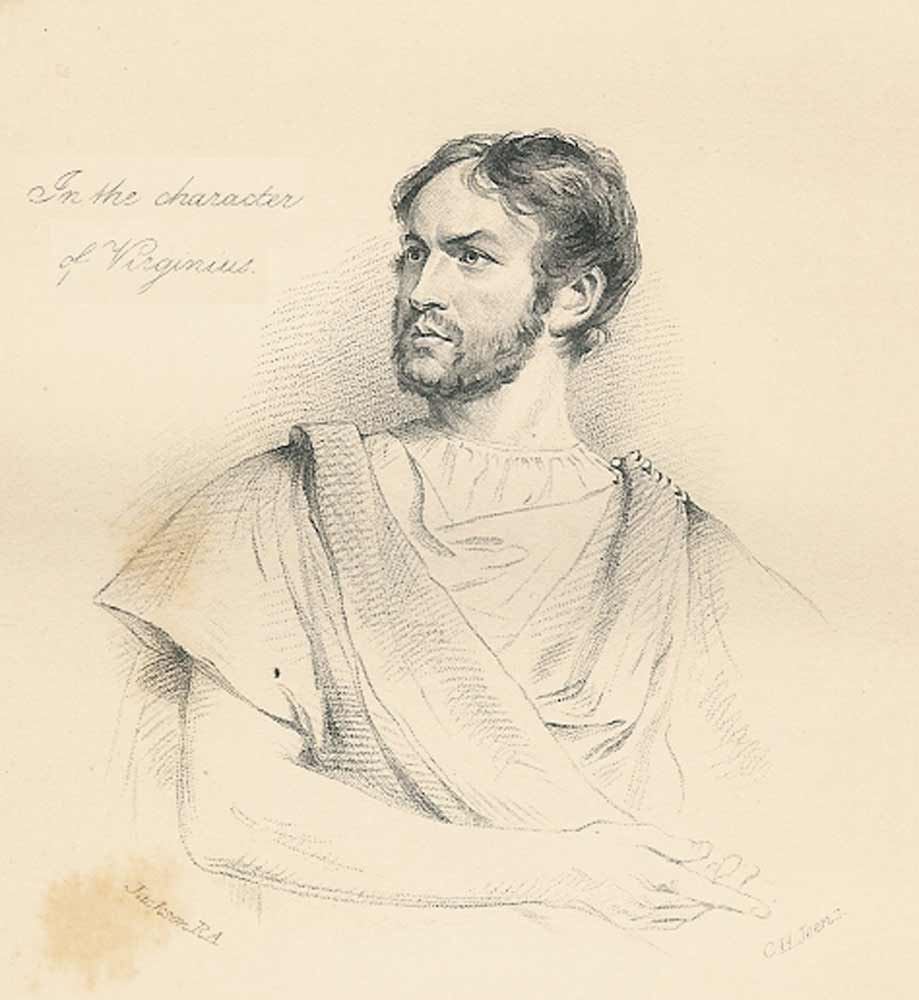
William Charles Macready
William Charles Macready went on to be a famous actor after attending Rugby School 1803–1808. The first chapter of the book deals with his early reminiscences, including the years he spent at Rugby School. In the passage in which he mentions football, Macready was called away from playing the game in the school close by the headmaster Dr Ingles. As Dr Ingles left Rugby School in 1806, to be replaced by Dr Wooll, this meeting must have taken place sometime between 1803 and 1806.
“I recollect one day, when playing foot-ball in the school close, Dr Inglis was walking on the gravel walk that surrounds it.” – MRFP011
Ingles (spelt incorrectly as Inglis by Macready) then interviewed Macready as to his career intentions. Macready could see his future in law and the headmaster questioned him as to whether or not he had considered his father’s profession. Macready senior was a theatre manager and part-time actor but Macready was insistent that he wished to go to the Bar and become a barrister. Happy with this choice, Ingles refrained from giving the advice he sought to impart and the conversation ended. Unfortunately, Macready’s father would go on to make a poor investment in a Manchester theatre and young William would feel honour-bound to abandon his aspirations and would go on to pursue an acting career in order to help with the family finances.
There are two potential options for the creation of Football at Rugby School that I can see. The first is that a group of boys and/or masters sat down together and drew up a set of plans for the game, and the second is that Football at Rugby has a parent game that was introduced to the school and that Football at Rugby School is a descendant of this game. We have already explored the possibility that ancient folk football is the parent or ancestor game for rugby and we found that to be highly unlikely.
THE ETON LINK
There is, however, one School game that raises its hand and claims that it could be the predecessor of Football at Rugby School. That game is Football at Eton School. I am not the first to identify this possibility; in their 1969 Oxford University history, Ross McWhirter & Sir Andrew Noble offered this opinion:
“Once given a field it would be almost unnatural if schoolboys did not play. Rugby at that time had two successive headmasters from Eton who therefore knew all about the Field Game: Rev Dr. Thomas James, D.D. (1778 to 1794) and then Dr. Henry Ingles, D.D. (1794 to 1806).” – RMOU012
RUGBY’S ETON-EDUCATED HEADMASTERS
Let’s look at the headships of these two masters through the words of HC Bradby B.A. in his book ‘Rugby’ in the ‘Handbook to the Great Public Schools’ series (1900 Bell & Sons, London). This is what he says about James:
“… one of the most distinguished of Rugby head masters, and the first to bear that title, Thomas James, an Etonian and fellow of King’s, commonly spoken of in Rugby at the present day as James the First.” – HCBR035
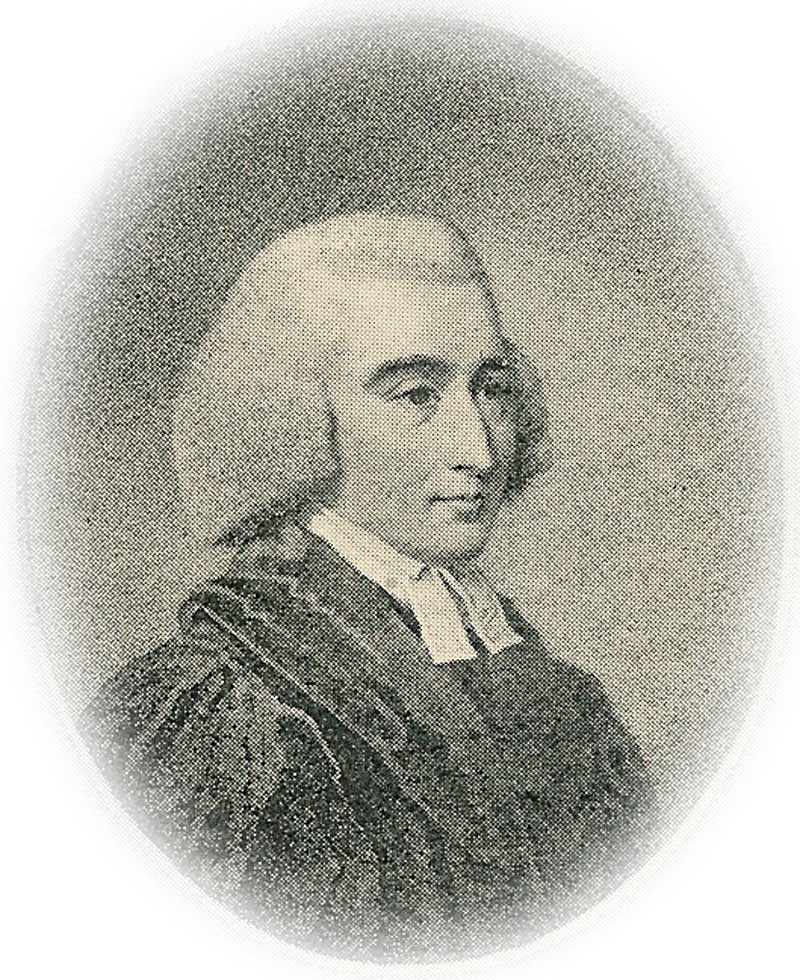
Rev Dr Thomas James
“Under him, the school took its position as one of the leading English public schools, and the numbers increased rapidly: the year after he came there were only eighty boys; eleven years later, in 1790, there were 240… His mental abilities were of no mean order, but his success was due not so much to his capacities as a scholar and a mathematician, but to his abundant energy, which displayed itself in the organization of the school down to the minutest details: in this organization he had little foundation to work on, for none of his predecessors had been called upon to govern anything like such a large number of boys, and it says much for the merit of his work that, through the manifold changes that have been made during the last century, much of it remains intact. The system which he introduced was based on the Eton system, under which he had been educated. The school was divided into six forms; the Sixth was the highest, and (like the Fifth) has survived as a name, though the reason for it has passed away. The routine of work for all forms was most carefully arranged. It consisted mainly of translation from Latin and Greek authors, and composition in these languages, but it was not exclusively classical: Bible History alternating with the Histories of Rome and England, modern geography and Milton all find a place in the regular curriculum of the Sixth and Fifth, while modern languages and mathematics, which latter study James himself greatly loved, although they were “extras,” were encouraged.
James’s arrangement of school hours has in the main survived, the principle being that on whole school days there should be five lessons, one before breakfast, prepared overnight, two before dinner, and two more in the afternoon, and it is from this period that the three half-holidays on Tuesday, Thursday and Saturday are inherited, though at this time the Thursday half holiday was not a regular one, but only given in honour of specially good work done by some member of the Sixth, “play for So-and-So” being the formula under which the good news was announced. The forms were very large, six masters being considered a reasonable number for a school of 200 boys, and James introduced the Eton tutorial system… and it is a further testimony to the character of the head master that he was able on these terms to attract such men as the two Sleaths, afterwards head masters respectively of Repton and St Paul’s, Innes, head master of Warwick School, Philip Homer, renowned as a Greek scholar, and Richard Bloxam, himself, an old Rugbeian, and father of the well-known antiquary.” (Matthew Bloxam) – HCBR035
In this quite extensive account of James’ period as headmaster, the author continues with his account of the memories of an old pupil from James’ reign:
““A sort of saturnalia,” writes an old pupil in his reminiscences, “followed the speeches” (they were then held in June, at the end of the half year).The last few days of the half year were spent in all kinds of riotous excesses. No lessons were expected to be done, excepting after a manner chosen by the boys – that is to say, anyhow; and half the windows of the school were broken, to be paid for by the parents, for the benefit of the Rugby glaziers” – HCBR042
In the same book, Henry Ingles’ praises were not so well sung:
“James was succeeded by another Etonian and Fellow of King’s, Henry Ingles, who well sustained the credit of the school during his twelve years of mastership. The numbers indeed fell by about fifty, but numbers are not always a sure indication of the efficiency of a school. He was a gloomy man, saddened by a terrible shock he had received when he had suddenly and unexpectedly met men carrying home the body of his eldest son, who had been accidentally drowned: it is related of him that, when one of the masters told him of the victory of Trafalgar, and added, “but I am sorry to say, sir, Lord Nelson is dead,” he replied, “And I wish I were dead also.” He made few changes in the school…” – HCBR044
The dialogue continues, mostly with the Great Rebellion of 1797 that occurred during Ingles’ headship. It is noteworthy that he is reported to have made few changes in the school, as opposed to Thomas James who was said to have introduced a new system to the school – that based on the Eton system.
THOMAS JAMES AT RUGBY SCHOOL
Let’s return to the end of the reminiscences of the former pupil, where “saturnalia” is mentioned. I had to get my Oxpop out to see what this means and I’ve learnt that saturnalia is the ancient Roman festival of Saturn, observed as a time of unrestrained merry making. After a little research I discovered that the primary source for this quote is former pupil Charles Apperley, also known as ‘Nimrod’, which was the pen name he used while writing for ‘The Sporting Magazine’.
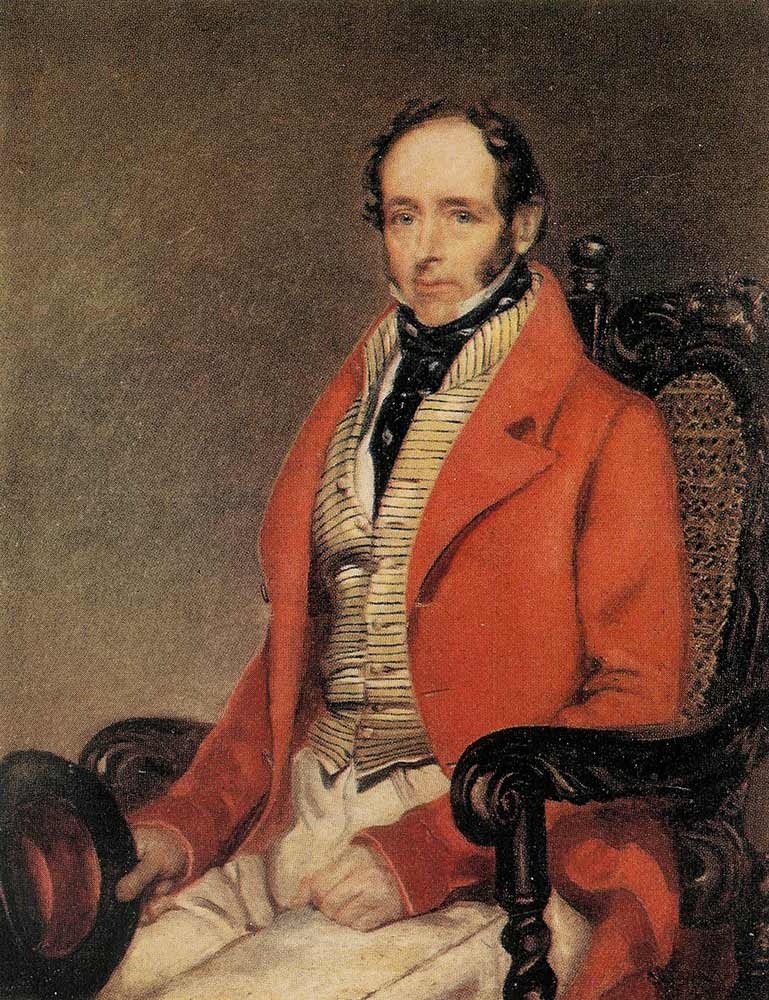
Charles Apperley “Nimrod”
The quote can be found in the book ‘My Life and Times’, authored by Nimrod (Charles Apperley) and edited by E.D Cuming, which is a compilation of Nimrod’s autobiographical writings. Apperley’s memories initially appeared as articles in ten installments of Fraser’s Magazine – the first in January 1842. He entered Rugby School in 1789, eleven years into the Rev Dr Thomas James’ headship. In the book, his memories of Rugby School stretch to two chapters and leafing forward a few pages from the ‘saturnalia’ quote we find the following passage:
Rugby school, in my time, sent forth some clever men into the literary world… Walter Savage Landor…He had a great name in the school as a scholar, a cricketer, a football player, and a pugilist, in all which characters he had very few equals… James was proud of Landor, and was inclined to cultivate his friendship as well as his mind; but, to use a common expression, Landor would not have him at any price…” – CALT144
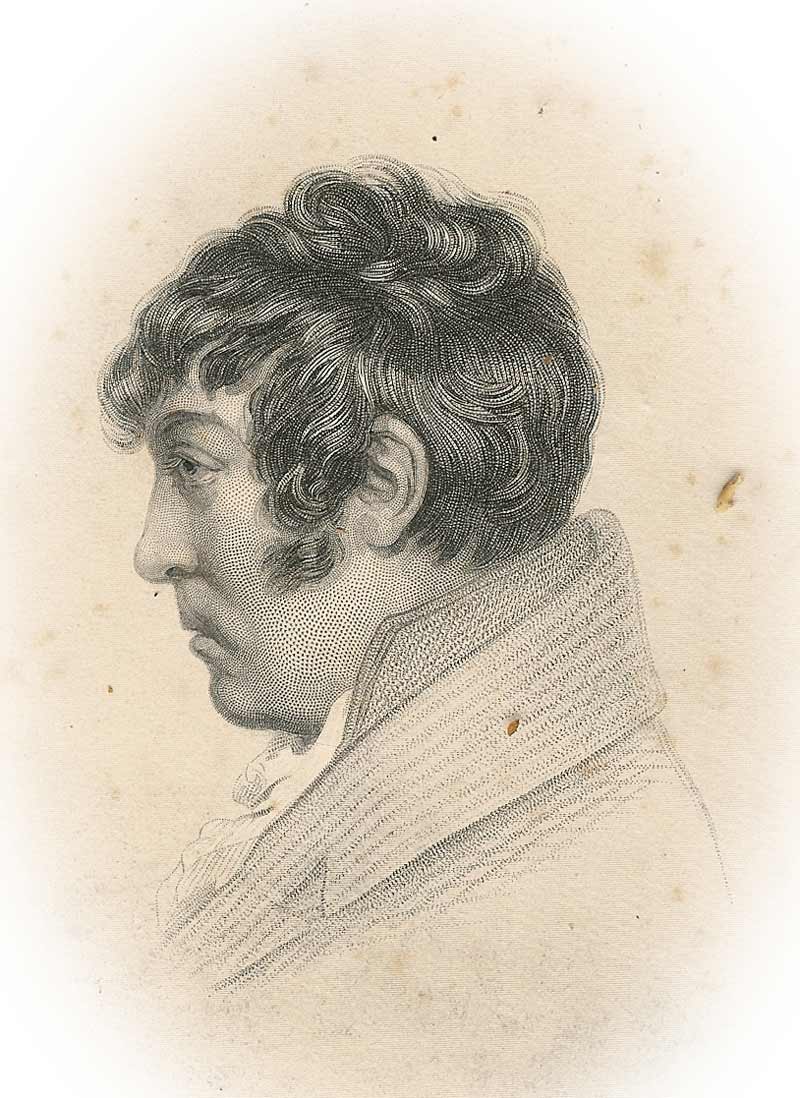
Walter Savage Landor
Apperley states that Landor had a great name in the school as a scholar, cricketer, footballer and pugilist. In the book he goes into much greater detail about his school work, cricket and pugilism, but fails to mention football again. As Landor is said to have been a ‘football player’ at the school, it must be agreed by all that football was played at Rugby School by Walter Savage Landor who entered the school in 1783 and left circa 1791/1792 (RSRE1783). If football was invented at the school during Landor’s time there, it would have been recorded by Apperley who roomed for four years with Samuel Butler, a contemporary of Landor. Therefore we must accept that the game Football at Rugby School was being played in the school when Landor started there in 1783. This is now the earliest date at which we can accept that football was played at Rugby School.
Landor pre-dated headmaster Henry Ingles, so if Football at Rugby School was created from Football at Eton, only Etonian Thomas James could have possibly introduced it to Rugby School. In his 1898 history of Rugby School, WH Rouse says of the Eton system that James introduced:
“James brought with him to Rugby Cambridge scholarship and Eton methods. We shall soon find not merely the tutorial system in full swing, and a body of præpostors served by fags, but dames’ houses, and other things and customs which speak of the same origin. Even the very books used at Eton were to be transplanted to Rugby. In this remodelling James was assisted by another Etonian, James Chartes, also fellow of King’s whom the Trustees at the same time appointed to be Second Master.” – WRRS129
The key words in the above quote are “and other things and customs which speak of the same origin.” I think it safe to say that one of those other things and customs could have been Eton Football.
Did the boys of Rugby School have the opportunity to play football? They had the space – the Close was large although there were fences between the fields. They had the time – the new system included three half-day holidays in a six-day week: Tuesday, Thursday and Saturday, although the Thursday half-day at that time was only granted as a reward for good school work. James had a system whereby he would announce towards the end of the Thursday third lesson the pupils who were worthy of the half day holiday. Rouse states:
“Then if after third lesson the welcome sound was heard of “Play for Butler” or “Play for Landor,” the boys would hasten over their work in anticipation of a fine afternoon’s sport.” – WRRS159
Charles Apperley spent four years rooming with Samuel Butler, who was to become Bishop of Lichfield and headmaster of Shrewsbury School, but he could not understand how Butler regularly won the opportunity of play from James:
“How then did he acquire the reputation of being the best scholar in the school; and how was it that “Play for Butler” (i.e., a whole holiday for the best exercise of the week) was oftener proclaimed for him than any other boy?” – CALT142
I think it fair to say from the above that James encouraged the leisure activities of the boys at the school. He was in close contact with the boys he taught in both the fifth and sixth forms (WRRS137), so he was face to face for most of the day with the ‘leaders’ of the school. Conversations about James’ time at Eton and what they did at Eton for play most probably took place. Not forgetting of course that the assistant master James Chartes was also ex-Eton, so he too could have been singing the praises of the ‘old Eton game’. If Football at Eton pre-dates Football at Rugby School, then it is possible that Football at Eton is the parent game of Football at Rugby School.
HISTORY OF FOOTBALL AT ETON
It is possible that football was played at Eton as early as in the late 1400s. A former headmaster of Eton, William Horman (c1440–1535), wrote the following in his Latin textbook ‘The Vulgaria’ published in 1519:
“Lusui erit nobis follies pugilari spirtu tumens”
“We will play with a ball full of wynde.”
Horman was headmaster at Eton between 1485 and 1494. From there he went to Winchester (1495–1501), another school with an important football history, and then returned to Eton as a fellow and vice-provost until his death in 1535. Although the book was published in 1519, he says in the introduction that he composed the book as a schoolmaster “many years before” (LCFG014).
In Chapter 27, ‘Of the Ball’, in his 1581 book ‘Positions Wherein Those Primitive Circumstances Be Examined, Which Are Necessarie for the Training up of Children’, Richard Mulcaster mentions three types of ball games – hand ball, footeball and armeball. He describes footeball as being an unruly dangerous sport and not a healthy pastime:
“…with thronging of a rude multitude, with bursting of shinnes, and breaking of legges, it be neither ciuil, neither worthy the name of any traine to health.” – RMPW105
It is commonly accepted amongst modern historians that Mulcaster’s mentioning of a training maister (coach), judge (referee) and smaller teams implies that these were in use at the time, but looking at the below extract I would say that this is a point of contention and that Mulcaster has merely taken these terms from military terminology. Rather than stating that these were already a part of the game, I would argue that he was a visionary who suggested that ‘any man’ could see that these three improvements would alter the game of football and that they would benefit the health of children should they play the game. The passage below was written in the 16th century so the English is not as we know it. In most cases the letters ‘u’ and ‘v’ are transposed compared to what we are now used to.
“Wherin any man may euidently see the use of the trayning maister. For if one stand by, which can judge of the play, and is judge over the parties, and hath authoritie to commaunde in the place, all those inconueniences haue bene, I know, and wilbe I am sure very lightly redressed, nay they will neuer entermedle in the matter, neither shall there be complaint, where there is no cause. Some smaller number with such ouerlooking, sorted into sides and standings, not meeting with their bodies so boisterously to trie their strength: nor shouldring or shuffing one an other so barbarously, and vsing to walke after, may vse footeball for as much good to the body, by the chiefe vse of the legges…” – RMPW106
Mulcaster was a big fan of Girolamo Mecuriale, the Italian physician who wrote ‘De Arte Gymnastica’, which is considered to be the first book on sports medicine. At the time of writing he had been incumbent as the first headmaster of the Merchant Taylors’ School in London but he was also an old Etonian.
Although there is no supporting evidence that can give us the date of the origin of football at Eton, it is recognized that Football at Eton pre-dates Football at Rugby School. In his recent ‘Eton Field Game’ Lachlan Campbell states that in the eighteenth century:
“Eton was playing a game called ‘Goals’, a primitive form of football, as well as a newer game (the Wall Game) played against the new wall along the Slough Road, built in 1717.” – LCFG016
In his 1911 ‘A History of Eton College’, Maxwell-Lyte attributes the earliest accepted origin of Football at Eton to around 1766 thanks to a manuscript prepared by Rev JCB Riddell, called Nugae Etonenses (MLEC316), which includes a list of games played at the school. The document has been dated by Eton historians based on the events that happened around that time at the college, so this date can be regarded as being fairly accurate. Within the list are games called ‘Goals’ & ‘Scrambling Walls’ (MLEC318), which are possibly the games that were later known as the Lower College game and the Wall Game. Football (MLEC319) is also mentioned, which Maxwell-Lyte states “was almost certainly the game as played in the Field” (the Field Game). These games will have been played in the ‘football fields’ (MLEC322), which are also mentioned in another part of the same manuscript. For there to have been football fields at Eton in 1766, it must be accepted that football was played there at around that time, and therefore Eton Football pre-dates Thomas James’ headmastership at Rugby School by at least 12 years. The question that we should now ask is:
IS ETON FOOTBALL THE PARENT SPORT OF FOOTBALL AT RUGBY SCHOOL?
In the early 1800s, Eton School (now College) had three versions of football. Let’s look at how these compare to Football at Rugby School:
THE WALL GAME – This game still exists today and is played against a wall that is 110 metres long. The wall was erected in 1717, so the game originated after that date. The game is more of a school cultural tradition than a contest. There is little movement as the game consists of a group of boys pressed against a wall trying to force a ball to move along it. I would go as far as to suggest that the game could also be described as dangerous boredom. There are few differing tactics and goals are extremely rare; in fact periods of over 100 years where no goals were scored at all exist in its history. There is no real comparison to Football at Rugby School.
THE LOWER COLLEGE GAME – This game ceased to exist after 1865, most likely because the ground on which it was played was sold or became unusable. In his 1917 book ‘Memories of Eton Sixty Years Ago’, Arthur Campbell Ainger provides the best description of how this game was played. In describing the various forms of football at Eton, he talks about the ‘fields of play’:
“It lay across the road to Sheep’s bridge and on it was played a game called ‘Lower College’. This was football reduced to its simplest elements. There were two goals marked on trees – the traces of one goal can yet be seen, the other tree has fallen long since. A “bully” was formed as usual, and one had either to kick the ball against the goal or to run it behind the line and touch it. It was not necessary to be “bullied” on the line in any way. For touching it one claimed a “shy” and was entitled to “boss” the ball at the goal, in front of which the opposing Eleven stood, so a goal was rarely obtained. The game was abandoned in 1865…” – AAME164
As the game ceased to be played in the 1860s and no other information for its methods of play exists, from the above account we can deduce that the goals were low and not high – once a ‘shy’ was scored, the conversion, called a ‘boss’, was taken with 11 players standing in front of the goal, and hardly any goals were scored. Unless the players were standing on each other’s shoulders, the goals must have been low down rather than high up. The use of trees as goals is however interesting considering the number of trees in the Close at Rugby School.
THE FIELD GAME – Again from Ainger’s book:
“In College Field the ordinary “Field” game was played, but in a much more rough-and-ready fashion than now. The goal-sticks had no crossbar; there were sticks at the four corners of the ground, but no lines were cut in the turf or otherwise marked either at the base or on the sides. Consequently the player very often did not know when he was near the line or over it – the umpire, when there was one, judged the point by looking along from the goal-post to the post at the corner and deciding as best he could. It followed that little or no attempt was made at the slow and elaborate progress along the line which is now in fashion – one went at once either for the goal or for a “rouge” off one of the opposite players – one failed probably much more often than not, but less time was wasted. It is our only object here to record matters, not to decide which system was best.” – AAME164
Of the three versions, the Lower College game looks to be the most similar to Football at Rugby School, but few records of the game exist. The Eton Field game, or to give it its correct title ‘Football as played in the field at Eton’ was more widely recorded in history. Although it is recorded that the first written rules for any form of football were laid down at Eton in 1815, these have not survived and so we’ll need to check out the oldest surviving sets of rules of football as played at Rugby and Eton. These are dated 1845 for Rugby School and 1847 for the Field Game at Eton. We will only compare the rules that relate to the nature of how the game was played, as several rules from both sets relate to discipline or timings and are quite lengthy. Firstly, however, let’s clarify why we should do this.
RULES, REGULATIONS & LAWS
The rules or laws of a game can give clues as to, or tell us how, a game was played. They are the best source of information when it comes to the aims and actions of the players in the game. These two sets of rules are however the first written rules and there are therefore no previous sets of rules to compare them against, apart from the recollections of the players and their memories of the verbal rules. Neither set of rules mentions how many players there should be to a team, the size of the pitch, or even the shape, size and type of ball to be played with. These are all believed to be presumed knowledge by the law makers. What we are looking for in the two sets of laws are similarities. If we compare Rugby League to its parent sport, Rugby Union, we can find lots of similarities in the actions (running, passing, kicking, catching, scrummaging), aims (scoring goals and tries), and in the terminology (try, goal, scrummage, tackle etc.). Rugby League split from Rugby Union 120 years ago and the sports are still similar. If Thomas James did introduce Football at Eton to Rugby School then we are looking at a smaller timeframe, with just over 60 years from its introduction to the first written laws. We know that the main additions to Football at Rugby School in the 1830s were the introduction of the touch down and running forward with the ball, so if we ignore these two features then we will have a better idea of how the game was played at Rugby School around the turn of the 19th century, so as to compare it with the Field Game at Eton.
To be able to properly analyse the laws, I’ve split them into different groups. It is important to understand how the laws relate to the game being played – what a law is saying to the player. Here we are not looking at the reasons for why the laws exist, just the different types that do exist. I have given some examples from the 1845 Rules of Football at Rugby School booklet and the 1862 Rugby School Rulebook. I’ve identified the following types of laws that exist:
1) KNOWLEDGE – Identifying the location, personnel and equipment to be used in the game. Explaining the terminology used in the set of rules/laws and the way in which a game is to be played.
1862 – Introduction – “Football is played on a large level field or piece of ground, near either end of which is erected a goal, composed of two upright posts eighteen feet high, with a crossbar placed ten feet from the ground.” – JMRB096
1845 – “xxxii. – At a big-side, the two players highest in the School shall toss up.” – FORU016
1862 – “16 – FIRST OF HIS SIDE is the player nearest the ball on his side.” – JMRB100
1862 – “45 – The walk in front of the Headmaster’s House, leading to the Barby Road is in goal.” – JMRB101
2) ACTION – Directing an action that is to take place during the game.
1845 – “vi. – KICK OFF FROM MIDDLE must be a place.” – FORU009
1862 – “A PLACE KICK is kicking a ball after it has been placed on the ground, in a small nick, made by the heel of the placer.” – JMRB099
1862 – “3 – FAIR CATCH – is a catch direct from the foot, or a knock on from the HAND of the opposite side.” – JMRB099
1845 – “xviii. – A player having touched the ball straight for a tree, and touched the tree with it, may drop from either side if he can, but the opposite side may oblige him to go to his own side of the tree.” – FORU012
3) AIM – Identifying the aim or object of a game: to score goals, etc.
1862 – Introduction – “The object of the game is to kick the ball over the adversary’s goal, which can be done either by dropping a goal or placing a goal: the former in the course of a game, and by any player of the opposite side who may happen to have the ball in his hands; the latter only after a touch down in goal.” – JMRB096
4) RESTRICTION – Creating boundaries for the actions, general play or other possible problems.
“viii. – RUNNING IN is allowed to any player on his side, provided he does not take the ball off the ground, or take it through touch.” – FORU009
“xi. – No player being off his side shall hack, charge, run in, touch the ball in goal, or interrupt a catch.” – FORU010
Lastly, rules and laws may be a combination of these categories. The two below tell players what they can and cannot do:
ACTION & RESTRICTION
1845 – “ix. – Charging is fair, in case of a place-kick, as soon as a ball has touched the ground; in case of a kick from a catch, as soon as the player’s foot has left the ground and not before.” – FORU009
1862 – “20 – Though it is lawful to hold any player in a maul, this holding does not include attempts to throttle, or strangle, which are totally opposed to all the principles of the game.” – JMRB100
In the columns below I have tried to compare laws relating to similar subjects within the games, so that if Football at Eton is the parent game of Football at Rugby, it will become apparent because of the similarities in the laws. If one of the columns is blank it is because I can find no law covering a similar subject. Where the laws do cover similar subjects we need to look at whether these laws correspond to knowledge, actions, aims and/or restrictions of the games.
Subject RUGBY 1845 ETON 1847
CATCHING FAIR CATCH – A fair catch is a catch direct from the foot. (ACTION)
CONDUCT That all fellows not following up be strictly prohibited from playing any game in goal, or otherwise conducting themselves in any way which shall be deemed prejudicial to the interests of their side. (RESTRICTION)
OFF-SIDE / POSITIONING A player is off his side if the ball has touched one of his own side behind him, until the other side touch it. (KNOWLEDGE)
No player being off side shall kick the ball in any case whatever. (RESTRICTION)
No player being off his side shall hack, charge, run in, touch the ball in goal, or interrupt a catch. (RESTRICTION)
A player when off his side having a fair catch is entitled to a fair knock on, and in no other case. (ACTION)
A player being off his side shall not touch the ball on the ground, except in touch. (RESTRICTION)
A player being off his side cannot put on his side himself, or any other player, by knocking or throwing on the ball. (RESTRICTION)
FIRST OF HIS SIDE is the player nearest the ball on his side. (KNOWLEDGE)
No player, if behind before the ball, may kick it up, or carry it to one of his own side to touch, but must leave it, where it stopped. (RESTRICTION)
A player is considered to be sneaking when only three, or less than three of the opposite side are before him and may not kick the ball. (KNOWLEDGE)
HANDLING A KNOCK ON – Distinguished from a throw on, consists in striking the ball on with arm or hand. (KNOWLEDGE)
No player may stop the ball with anything but his own person. (ACTION & RESTRICTION)
Hands may only be used to stop the ball, or touch it when behind. The ball must not be carried, thrown, or struck by the hand. (ACTION & RESTRICTION)
ROUGE A rouge is obtained by touching the ball first, after it has been kicked behind. (KNOWLEDGE)
No player may run behind the goal sticks before the ball be kicked behind, either to prevent, or obtain a rouge. (RESTRICTION)
Should the player, who has prevented the rouge have been behind before the ball, a player of the opposite side may touch it, and claim a rouge. (ACTION)
If the ball go behind the goal sticks and without being touched, be kicked before them again, any player of the opposite side, if he can touch it first, may claim a rouge. (ACTION)
If the ball be kicked behind by a cool kick, that is, when no one of the opposite side be bullying the kicker, No rouge, whoever touched it, can be obtained. (RESTRICTION)
If a rouge be obtained before the time for leaving off expires, and the time expires, before the rouge is finished, the said rouge must be played out, until either a goal be obtained, or the ball be kicked outside the side sticks, or behind the goal sticks. (KNOWLEDGE)
No rouge, or goal obtained after the time expires is admissible, except in the case of rule 16. (KNOWLEDGE)
A rouge may be obtained by touching the ball, when on the line of the goal sticks. (ACTION)
KICK OFF KICK OFF FROM MIDDLE, must be a place. (ACTION) At the expiration of half time, goals must be changed, and a bully formed in the middle.
KICK OUT KICK OUT must not be from more than ten yards of goal if place-kick, not more than twenty-five yards, if a punt, or , drop, or knock on. (ACTION & RESTRICTION)
KICKING If a player take a punt when he is not entitled to it, the opposite side may take a punt or drop, without running if the ball has not touched two hands. (RESTRICTION)
CRAWLING No crawling on the hands and knees, with the ball between the legs is allowed. (RESTRICTION)
CHARGING A KICK CHARGING is fair, in case of a place-kick, as soon as a ball has touched the ground; in case of a kick from a catch, as soon as the player’s foot has left the ground, and not before. (ACTION & RESTRICTION)
TOUCH A player may not in any case run with the ball in or through touch. (RESTRICTION)
No agreement between two players to send the ball straight out shall be allowed on big side. (KNOWLEDGE)
A player touching the ball of his side must throw it straight out. (ACTION) The ball is dead when outside, or in line with the side sticks, and must not be kicked. (KNOWLEDGE)
When the ball is dead, it must be thrown in, or a bully formed parallel to the place where it stopped: these, are to take place alternatively. (ACTION)
If the ball bounds off a bystander or any other object, outside the line of the side sticks, it may be kicked immediately on coming in. (ACTION)
If the ball, when kicked out, bounds from any object without coming in, it must be put in parallel to the place, where it struck that object. (ACTION)
TACKLING CONTACT – A player standing up to another may hold one arm only, but may hack him or knock the ball out of his hand if he attempt to kick it, or go beyond the line touch. (ACTION & RESTRICTION)
No player may be held, unless he is himself holding the ball. (RESTRICTION)
No hacking with the heel, or above the knee, is fair. (RESTRICTION)
No player but the first on his side may be hacked, except in a scrimmage. (RESTRICTION)
TREES & MISC A player having touched the ball straight for a tree, and touched the tree with it, may drop from either side if he can, but the opposite side may oblige him to go to his own side of the tree. (ACTION)
The discretion of sending into goal rests with the heads of sides or houses. (KNOWLEDGE)
No player may wear projecting nails or iron plates on the heels or soles of his shoes or boots. (RESTRICTION)
Nobody may wear cap or jersey without leave from the head of his house.
INJURY If a player shall have begun the game and shall be hurt, or otherwise disabled from going on, no substitute may take his place. (KNOWLEDGE)
FALLING The bully, or rouge must be broken, immediately a player falls on the ball and formed anew. (KNOWLEDGE)
If a player falls on a rouge, or a bully, although not on the ball, and calls ‘man down’: or calls for ’Air’, the said Bully or rouge must be broken, and formed anew. (KNOWLEDGE)
GOALS All matches are drawn after five days, but after three if no goal has been kicked. (KNOWLEDGE)
All little sides the goals shall be four paces wide, and in kicking a goal the ball must pass out of the reach of any player present. (KNOWLEDGE)
The goal sticks are to be seven feet out of the ground: a goal is gained when the ball is kicked between them provided it be not over the level of the top of them. (KNOWLEDGE)
The space between each goal stick is to be eleven feet. (KNOWLEDGE)
When a rouge has been obtained the ball must be placed one yard from the centre of the goals: and no player is to touch the ball, or let it rest against his foot, until the player, who obtained the rouge, has kicked the ball himself. (KNOWLEDGE & RESTRICTION)
One goal outweighs any number of rouges, if each party has an equal number of goals, that party wins, which has the majority of rouges in addition to the goals. If no goals are obtained, the game Is decided by rouges. (KNOWLEDGE)
RULES OBSERVANCE Heads of sides, or two deputies appointed by them, are the sole arbiters of all disputes. (KNOWLEDGE) To prevent dispute it is better to appoint, before the game begins, two umpires: one chosen by each party, and a referee to be agreed on by both parties, where decisions, if the umpires differ, is to be final.
It will be the duty of the umpires to enforce the rules: to decide on disputes that arise: to break a rouge, or bully, when necessary, and to see fair play for both parties. (KNOWLEDGE)
Looking at the above two sets of rules, there is no real common ground apart from the offside laws. The terminology in particular is very different. Rouges, bullies and sneaking at Eton, vs. scrimmage, fair catch and knock-on at Rugby. The common denominator as far as the terminology goes is the goal, but it’s a different type of goal: in Rugby it’s over the bar and at Eton it’s between the posts. We do find some more common ground in the form of place kicks in the memories of older players. In the ‘Memories of Eton Sixty Years Ago’ by Arthur Campbell Ainger:
“The most important alteration in the rules of the game, both in the Field and at the Wall, has been the curtailment of the privileges of the “behinds.” Formerly they might catch the ball, deposit it on the ground, and so kick it. An adroit behind would catch the ball on his left hand and deposit it on his right, or vice versa, to the confusion of his adversaries. This has been stopped altogether in the Field and to a great extent at the Wall.” – AAME166
Whilst at Rugby School, according to M.H. Bloxam:
“… caught the ball in his arms. This being so, according to the then rules, he ought to have retired back as far as he pleased, without parting with the ball, for the combatants on the opposite side could only advance to the spot where he had caught the ball, and were unable to rush forward till he had either punted it or had placed it for someone else to kick, for it was by means of these placed kicks that most of the goals were in those days kicked, but the moment the ball touched the ground, the opposite side might rush on.” – ORSR009
In both cases, after catching the ball, players had to place the ball on the ground to kick it. In the Eton game “an adroit behind” it seems would catch the ball one handed, then swap hands and kick it. The 1845 Football at Rugby School Rules (law v. – try at goal) mention “even though it touch two hands”, which leads me to believe that at some earlier stage in the game catching one handed must have been the norm. The difficulty in analysing the laws of the developmental stages of the games is that the rules were verbal and so no records exist.
For Football at Eton to be the parent sport of Football at Rugby School, Eton Football would have had to have been played at Rugby School and the game would have had to have evolved of its own accord. My belief is that there is not enough common ground between the 1845 Football at Rugby Rules and the 1847 Football at Eton rules for it to be a real possibility. Not only are there differences in the natures of the games, but the terminology is almost completely different. The term ‘goal’ was used across several forms of school and folk football (MSAF279) so it cannot be regarded as being uniquely common to both of these codes of school football. There is some common ground with respect to place kicks and the emphasis on offside rules, as well as possibly one handed catching, so it is quite possible that Eton Football may have played some part in the origin of Football at Rugby School.
Although the Lower College game looked to be the most similar to Football at Rugby School, with the use of trees as goals, with no further information on the Lower College game at hand, we are forced to assume that the nature of the Lower College game was similar to the Field Game, but with the terminology and the goals being the difference.
I started this Chapter by saying that there were two possible options for Football at Rugby School to have started as a ‘created sport’. We looked in detail at the Eton option, but we haven’t looked at the possibility of a group of masters and/or boys at Rugby School drawing up plans for a game. It’s a possibility but I think an unlikely one. If a group at the school had invented the game then surely they themselves or their contemporaries would have sung their praises for evermore. I refer again to Bloxam’s notes on the handed down traditions at the school:
“At this time boys not unfrequently continued at School ten or even twelve years, and traditions of a longer date were handed down than at the present time, keeping remembrance of any stirring event alive.” – MBRN087
SUMMARY – The earliest known date for Football at Rugby School was 1803–1806. We have undertaken research through the memoirs of the former pupil Charles Apperley and moved the earliest known date back to 1783 during the headmastership of Thomas James and at the time of former pupil turned writer Walter Savage Landor. James introduced the Eton education system into Rugby School in 1778. We’ve looked at the history of Eton Football and found that it pre-dates Thomas James’ arrival at Rugby School by at least 12 years, so it’s a possibility that Eton Football is the parent game of Football at Rugby School. We’ve analysed the rules of the two games and compared Football in the Field at Eton (the Field Game) to Football at Rugby School. We have decided that it is unlikely that Football at Rugby School descended from Eton Football and that it is equally unlikely that the game was invented by a group of Rugby School boys and/or masters.
CONCLUSION – It’s possible that Football at Rugby School was a ‘created game’ and it’s unlikely but not impossible that Football at Eton is its parent game.
FOOTNOTE – I’m fed up with songs, let’s play a game. I’m going to call it sumspeed. The first one to multiply 77 x 77 and get the correct answer is the winner. The answer is 5939, I win. I think I could become world champion, what do you think? We could start by organizing a tournament with regional qualifiers leading up to a final which should take place in Sumderland. A bad joke, I know, let’s move on…………..
|