| AIM – To explore the writings of Matthew Bloxam more closely in order to see if there is any additional information that can be gathered relating to the origin of Rugby Union.
When I started writing this book it was only going to be a short article for www.world-rugby-museum.com so that I could explain how Webb Ellis had invented the game of rugby football. Writing a book about the origin of Rugby Union was not the aim. I only set out to understand the origin of the game. To do this I’ve had to take a closer look at sport in general and read a lot of books about Rugby Union and the public schools. I don’t want to blow my own trumpet too hard but in playing sport I was reasonably successful. A lot of the time my victories or accomplishments were down to sheer hard work – in training, in researching methods of play or technique and finally in determination. I think that throughout my life I have developed an instinct for sport. This is why within a few minutes of picking up the 1897 Old Rugbeian Society report, I knew that the Webb Ellis event was not the origin of rugby, and when reading through Shearman and Marshall’s books, I had the same feeling about folk football.
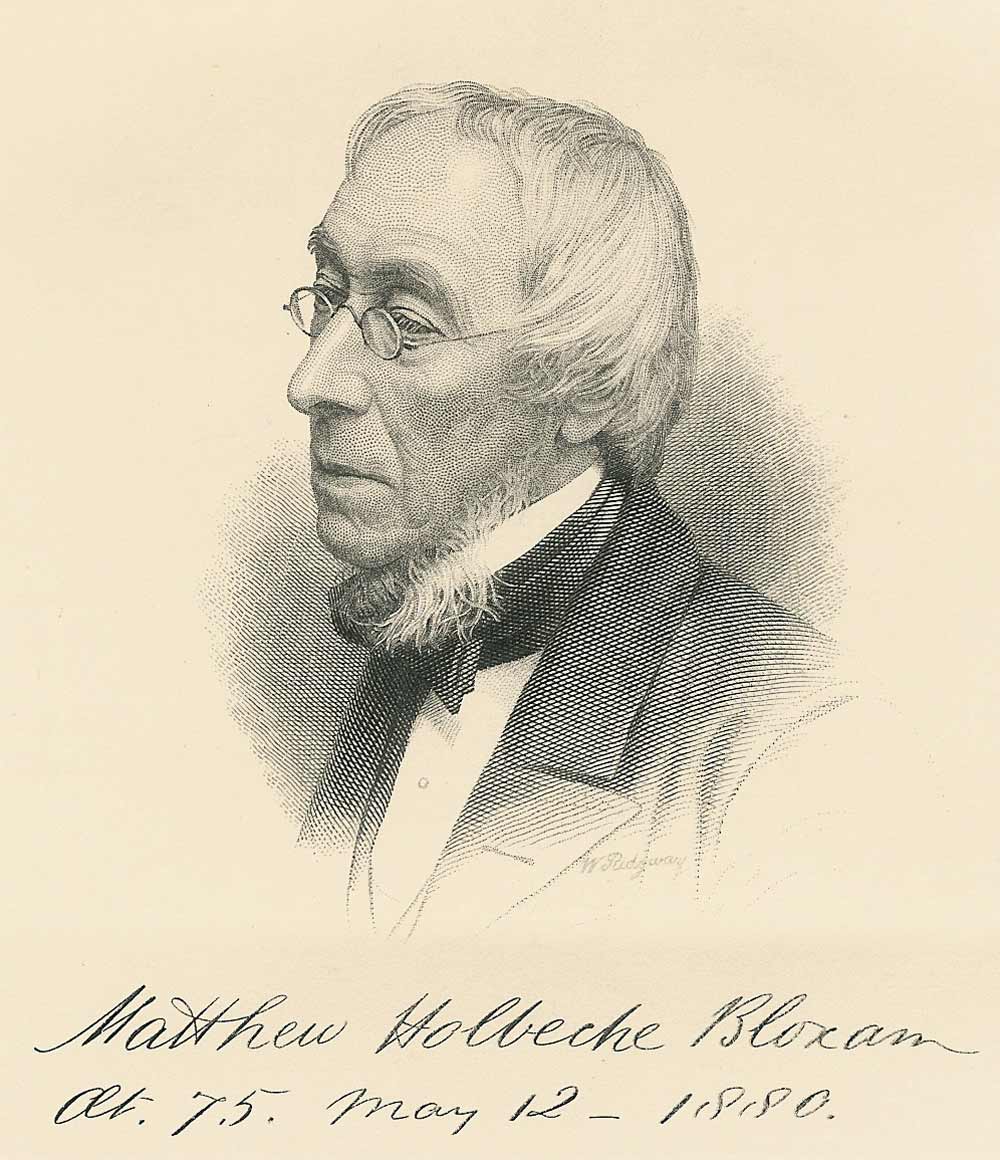
While I’ve been working on this book there is one name that keeps cropping up – Matthew Holbeche Bloxam. Particularly while I was writing the last few chapters of the book, my instinct clicked into overdrive when it came to Mr Bloxam. I knew that there was something wrong with his writings and with his published articles, but for a long time I just couldn’t put my finger on it. Scratching my head and asking myself questions about Bloxam almost became a full time occupation.
Firstly, let’s look at what Matthew Holbeche Bloxam says about himself:
“I consider myself in some respects as one connecting the past with the present. I have transacted business with a Rugbeian who entered Rugby School in the reign of George II. – 127 years ago. I entered Rugby School nigh 72 years ago, and left the School 64 years ago; but whilst I was at Rugby a retired Master of the School died who was born in 1718, early in the reign of George I., 167 years ago. The Rev Henry Holyoak was master of Rugby School in the boyhood of that old retired master, and Mr Holyoak was alive in the lifetime of a nephew of Lawrence Sheriff, the Founder of Rugby School. Now Lawrence Sheriff died 318 years ago; such is my knowledge of the past.” – MBRN0xxxii
The above extracts and the two below are from the book ‘Rugby – The School and Neighbourhood’ – a compilation of Bloxam’s papers and articles. This is what his brother John Rouse Bloxam says about him:
“Born at Rugby, May 12, 1805, dying at Rugby, April 24, 1888, living almost without a break at Rugby for those 83 years, the son of a Master at the school, the friend of generation after generation of Rugby boys and masters, Matthew Holbeche Bloxam was Rugbeian to the backbone. Nothing delighted him more in his later years than to gather round him a little circle of his friends among the boys in the School, and to recall to them, the folk of modern times, the Rugby of the far-off past; to tell them of the terrific combats and Homeric feasts, in which their predecessors, when the century was young, indulged; to describe the rude methods of football in those days, and the variations at times indulged in of hoops, marbles, and pegtops; to dwell on the memory of the friends of the past, and especially to tell of such of his contemporaries as were still surviving. Among the various records of the history of the School, few equal in interest the paper which Mr. Bloxam read before the Natural History Society in November, 1883, entitled “Personal Reminiscences of Rugby School as it was in 1813, 70 years ago”…” – MBRN0xix
The editor of the book, W.H. Payne, wrote:
“In an article on Rugby School, in the New Quarterly Magazine, October 1879, after some three pages of introductory matter, the writer says “In the history of the School itself, apart from its external growth, there is nothing known that is worth recording till the year 1828, when Dr. Wooll was succeeded by Dr Arnold.” This statement shows a somewhat limited range of vision. Mr Bloxam, himself one of the most distinguished Rugbeians of that earlier era, spent great part of his life in investigating and recording the history of the School previous to 1828. This book might indeed be called “Præ-Arnoldian Rugby.” It will show that there were some things worth recording in that dim and distant past, and will, it is to be hoped, keep alive the memory, not only of the distinguished writer and antiquary, but of other good men and true, who adorned Rugby in her comparatively early days.” – MBRN0pf.v
Bloxam was actually born in a Rugby School dames’ house run by his father R.R. Bloxam, a master at the school. In the history of Rugby School there is only one person who could possibly lay claim to being a more through and through Rugbeian than Matthew Holbeche Bloxam O.R., F.S.A. and that’s his father Rev. Richard Rouse Bloxam who was a pupil 1777–c1784, a master at the school from 1790 until 1827 and a ‘fellow of the school’ until his death in 1840 (MBRN0xvii).
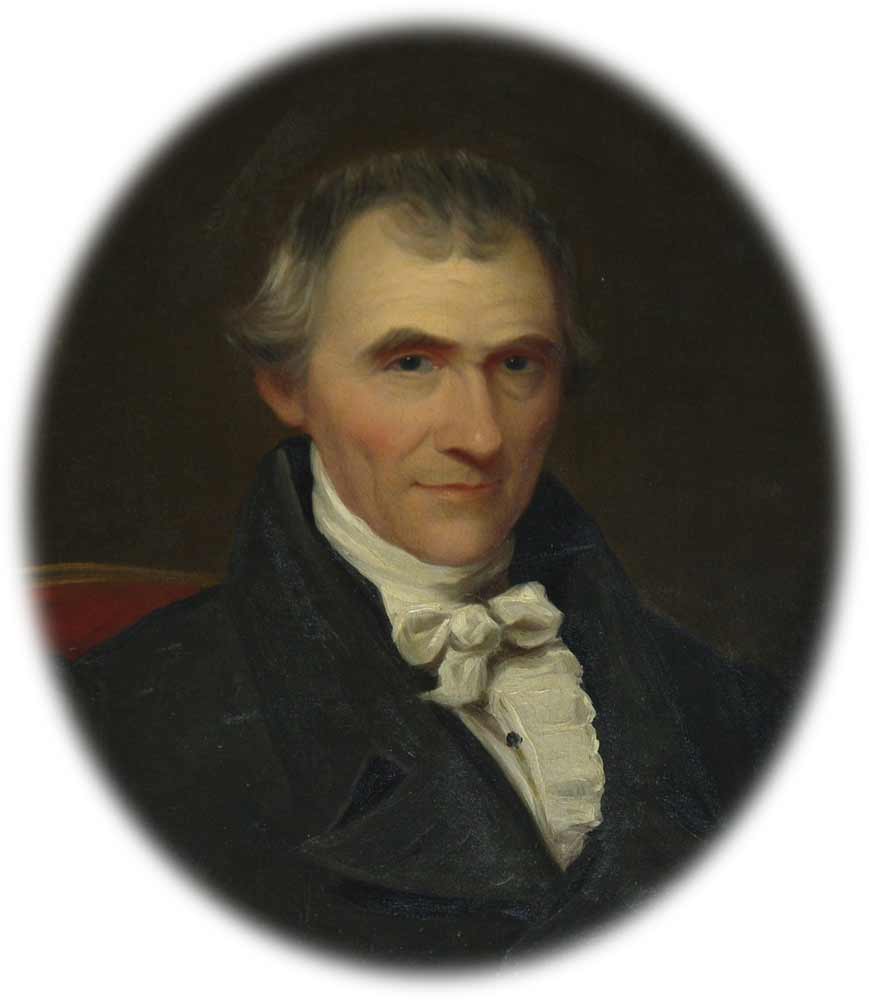
Rev. Richard Rouse Bloxam
(image courtesy of Rugby School)
I read through the book of Matthew Bloxam’s articles and papers about the town of Rugby and Rugby School and I came to the conclusion that he was obsessed with old churches. Why else would he write books on gothic architecture and write extensively about pews, galleries, monuments, ministers and monks and about who is buried where and who has donated items to the churches in and around Rugby. Eleven pages of the book are dedicated to Lutterworth Church and he dedicates several other pages to other churches in the area. Football at Rugby School is mentioned on occasion in the book but everything points to a man who goes to church to look around and see what it is made of.
Something was still not right. I came across another letter penned by him in the London Standard, this one in reply to a previous article that had stated that there were Old Rugbeians at a Rugby School event that had done ‘battle at football’ on the Close 25 years before. This letter is dated 22 October 1872, four years before his first mention of William Webb Ellis. Bloxam wrote about those who had played football on the Close 50 years earlier. The error in the original article is pretty innocuous but Bloxam is proud that he played on the Close and is stirred enough into writing a letter to correct the Standard:
“RUGBY SCHOOL FOOTBALL – TO THE EDITOR OF THE STANDARD
SIR, - In your article of this day on Rugby School, which will have been read with deep interest by many an old Rugbeian, you allude to “those who had fought the daily battle of football on the old close a quarter of a century since.” May I be permitted to state that at least half a dozen old Rugbeians were present at the meeting on Sunday last, who had fought the battle of football on the old close upwards of half a century ago. Perhaps I may be allowed to mention names:- The Bishop of Rochester; C.M. Caldecott, Esq., J.P., of Holbrooke Grange, one of those whose uncle entered Rugby School upwards of 120 years ago; the Rev. E.M. Stanley, who officiated as chaplain to the Bishop of Rochester; two of my brothers, the Rev. Andrew Bloxam and the Rev. John Rouse Bloxam D.D.; and myself. There were then no distinctive badges of honour, bags or flannels; and caps, which are at the present day so eagerly contested for and dearly prized by Rugbeians, were unknown; but time has not effaced the feelings of attachment, veneration and affection which still exists amongst the surviving Rugbeians of half a century and more towards the old school at Rugby – Oct 22 – MATTHEW HOLBECHE BLOXAM.” – LEVS18721023
When I read his other letters I realized that both the 1876 Standard letter and the Meteor article in response to the Times article were corrections to the remarks of others. Bloxam was pointing out errors that were appearing in print. Let’s look at the 1876 Standard letter first.
“Permit an old Rugbeian, at school under the headmastership of Dr. Wooll, who resigned that office in the summer of 1828, to say a few words on the point in controversy in the present Rugby game. The running with the ball in one’s hands is of no great antiquity as regards Rugby, it has there originated within the last half-century.” – LEVS18760226
And in 1880:
“A leading article in the Times newspaper, the leading journal of Europe, a few weeks past, on the Rugby School Football Rules and Play, as contrasted with the Association Rules, has prompted me to write a few words on the game of football, as played at Rugby in my time, 1813–1820…In the latter half year of 1823, some 57 years ago, originated, though without premeditation, that change in one of the rules, which more than any other has since distinguished the Rugby School game from the Association Rules… It was Football and not handball, plenty of hacking, but little struggling.” – METR18801222
Bloxam’s response to the Times letter was to show that he had played football. At that time, in the 1880s, the term football was becoming more and more associated with the Association game. It’s obvious from his letters that Bloxam was an authority on the game and knew all about Football at Rugby School. That’s why he was correcting articles and letters that appeared in the daily newspapers. He introduced the Webb Ellis story and he was very informative about football as he had played it between 1813 and 1821. He knew all about the rules and the dress of the players. Then it clicked that what was missing from the combined writings of Matthew Holbeche Bloxam was the origin of Football at Rugby School. He was a historian, so surely he would have been interested in when football had first come to Rugby School. So what I did next was to go back through the book ‘Rugby – The School and the Neighbourhood’ and I have listed mentions of most of his origin theories on various subjects below.
“…hence the origin of boarding houses.” – MBRN002
Speaking of the 1797 Great Rebellion: “Its origin was as follows.” – MBRN065
“When I first entered Rugby School a barbarous custom existed, which would hardly be permitted in these days, and the origin of which I am altogether unable to trace.” – MBRN071
“From this custom originated the frequent pugilistic encounters which then took place…” – MBRN072
“Now the curious feature in this case was that there was no premeditation: the whole originated from an individual, and he not one of the leaders of the run.” – MBRN088
Speaking of Swift, author of Gulliver’s Travels, visiting the East Sheen playing field: “Here Swift, the celebrated Dean of St Patrick’s, was a constant visitor, and amidst these academic groves it is possible the idea of those celebrated travels of Captain Lemuel Gulliver may have originated.” – MBRN102
Of the no running forward with the ball rule: “I have since ascertained that this change originated with a Town boy or Foundationer of the name Ellis, William Webb Ellis…” – MBRN110
“In the latter half-year of 1823, some 57 years ago, originated though without premeditation, that change in one of the rules, which more than any other has since distinguished the Rugby School game from the Association rules.” – MBRN109
Of Treen’s Tree: “I have failed in my endeavours to make out the origin of the name.” – MBRN093
About Mr Robert Dover’s Olimpick Games upon Cotswold Hills: “These games, if not the origin, were the precursors of our present athletic sports.” – MBRN111
“That honoured institution the Crick Run, though of no great antiquity, having been started considerably within the last 50 years, though its origin is now lost in oblivion…” – MBRN142
“Of this streamlet, a legend – the origin of which I have been unable to trace…” - MBRN147
“On the table land, over these fields, before the Rugby enclosure took place in 1774, the Rugby Races were run, and the second field from the road still retains the name of “Starting Post Close.” When these races originated I know not; I can only trace them back to 1721.” – MBRN152
About the Gunpowder Plot conspirators’ meeting house: “…not only is the tradition extremely vague, but I think I can point out the origin.” – MBRN150
About an arch in Bilton Church: “Of the origin, progress, development and disuse of this rite, I have lately treated in a paper read by me…” – MBRN169
“To the bloody hand of Ulster, then, we may look for the origin of the Legend of Lawford Hall, – a legend I can trace no higher than the middle of the eighteenth century.” – MBRN189
“The remembrance of two of old time, Paschasius Radbertus, who raised or originated the great religious controversy of the ninth century…” – MBRN197
“This, no doubt, had originally a wooden door and lock to fasten it, but no traces of the door are now apparent.” – MBRN205
“…how and when it originated, Bishop Jewel treats at length in “The Defence of the Apology of the Church of England,”…” – MBRN207
As we can see from the above examples, Bloxam has attempted to establish the origin of various subject matters. The Rugby School Athletic Sports he has attributed to Mr Robert Dover’s Cotswold Olimpick Games. The Rugby Races he traced back to 1721, but says that he could not trace them back any further. He says that the running rule in football originated with Ellis. He was unable to identify the origin of the name ‘Treen’s Tree’. Bloxam was like all other 19th century historians and writers: they aspired to reach the dizzy heights of Charles Darwin and ‘origin’ was the buzzword of the day. Charles Darwin junior was even a pupil at Rugby School in the 1850s so it’s possible that Bloxam rubbed shoulders with the great man himself. Bloxam wasn’t frightened of pinpointing an origin or saying that he didn’t know about something’s origin or even guessing what the origin of a particular thing was. But of Football at Rugby School, its origin or any reference to it remains absent throughout the book.
Reference to the origin of Football at Rugby School isn’t the only sporting origin missing. The origins of cricket and Eton Fives at Rugby School are notable absentees. I was surprised to learn from H.C. Bradby’s 1900 history of the school that there were four Eton Fives courts in Rugby School (HCBR138 & 139). This was the last clue that I needed. Bloxam hadn’t mentioned Eton Fives at all. He knew how football had arrived at Rugby School and the reason that he avoided telling anyone about it was because he didn’t like it. He believed that the origin lay with Football at Eton School, which arrived during the headmastership of Thomas James and his remodelling of the school on the Eton system. Thomas James needed a prosperous school so he copied the successful Eton system of education, the five lessons a day, praeposters & fags, dames’ boarding houses and he imported Eton’s successful sports including cricket, football and fives. Matthew Bloxam knew this. His father, Richard Rouse Bloxam, had first entered the school in 1777 in the last intake of pupils before the start of James’ reign. He left as an exhibitioner in about 1784, but was back again as a master in 1790 when the school was still under James’ leadership. Like his son, Bloxam senior was a historian and it was he who penned the chapter on Rugby School in Nicholas Carlisle’s 1818 book on the grammar schools of England and Wales. If James had introduced Eton Football at Rugby then Bloxam senior would have known because he was at the school both when James started and when he finished. He would have passed this information onto his son. If he hadn’t have learnt it from his father, Matthew Bloxam would have learnt it from asking questions of other Old Rugbeians with whom he came into contact. As Payne said, he “spent a great part of his life in investigating and recording the history of the School previous to 1828”.
Matthew Bloxam was an honest man, which is why in his printed works you won’t find any information whatsoever on the origin of Football at Rugby School. He simply doesn’t volunteer this information. He knows how football arrived at the school but chooses to withhold the information, volunteering only the details about how football was played in his time, and doing so when he needs to correct the misconceptions of others. He wants people to know that he played ‘football’ and not ‘rugby’, which is how the game was becoming known. Rugby to him meant two things – his town and his school. He never played rugby: he played football and he always referred to it as such when he was talking about the game he played. When he needed to refer to the game of Rugby Union, he called it “the present Rugby Football” game – referring to Rugby, the school that he attended, and football, the game that he played there. He brought up the Webb Ellis story to prove that he was playing football and not handball.
Let me put you in a similar position to see how you react. Imagine that your father is in prison for manslaughter. He accidentally killed someone with a chainsaw when he was cutting down trees. He was messing around with the chainsaw; it slipped and cut an artery in his workmate’s leg. He tried hard to stem the bleeding, performed first aid, called for help and did everything he could to save his mate’s life. The court didn’t see it that way, they focused only on his messing around and he was sentenced to 10 years in prison. Five years later you are on holiday and have met a group of people and you are all discussing the film the Texas chainsaw massacre. Someone in the group googles chainsaw deaths and they come across your father’s story. The ‘googler’ starts to tell his story but then starts to invent information around the story. They say that your dad went on a rampage through a shopping centre, cutting people’s arms and legs off, that he was an evil man and that he is in prison for life and that he deserves everything that he is getting. You love your dad; do you:
a) Stay silent?
b) Tell the correct the story?
If you are like me then my guess is that you’ll plump for option b), and previously to that you wouldn’t have volunteered any information about your dad being in prison at all. With Bloxam’s writings I’d say that he is in a similar situation with Thomas James’ Eton System. He doesn’t mention James’ introduction of the Eton system in the article on him that appears in ‘Rugby – The School and Neighbourhood’. There is just one mention of Eton, and that was that Dr James was a former pupil there.
Remember his opening boast?
“Now Lawrence Sheriff died 318 years ago; such is my knowledge of the past.” – MBRN0xxxii
Let’s look again at what W.H.D. Rouse says in his 1898 history of Rugby School:
“James brought with him to Rugby Cambridge scholarship and Eton methods. We shall soon find not merely the tutorial system in full swing, and a body of præpostors served by fags, but dames’ houses, and other things and customs which speak of the same origin.” – WRRS129
By other things is Rouse referring to sports – cricket, football and Eton Fives?
The good news for all future Rugbeians is that Eton Football was run by the boys; it was they who made up the rules and organized the games. The other good news is that the goal in Football at Eton is low – between the posts. It’s only at Rugby School that we find the goal above the crossbar. We’ve already decided through the analysis of the rules that it’s highly unlikely that Football at Eton was the parent game of Football at Rugby School. For Thomas James to have introduced Eton football to Rugby School, he would have had to have introduced some Eton schoolboys too to teach others the game and had this have happened then the terminology of the Eton game would have stuck.
THOMAS JAMES
If Thomas James were alive today he would be known as ‘Thomas the Beast’. He loved nothing more than to flog and cane his pupils. ‘Discipline’ was his word. Whilst he was a pupil at Eton School 1761–1766 he wrote a whole pamphlet on the subject of Eton discipline. He had no interest in sport but he did recognize it as a necessary reward for good behaviour. ‘Play’ was his buzzword. In his pamphlet on discipline he mentions play 25 times, adding that “it [would] encourage in the boys a spirit of Emulation.” (TJED001–012). It’s likely that James tried to teach a form of Eton Football to the boys at Rugby but as the game was self-regulated by the players it quickly would have taken on a new course of evolution.
I think that this is what happened: either Thomas James or James Chartes turned up on the Close one day with a ball and said to the boys of the 6th form “this is a football and this is how we used to play football at Eton – we kicked the ball against the tree and that constituted a goal. If you are in front of the ball when it is kicked you are off-side. Use your fags to keep goal; that keeps them out of mischief. You (to the head of school) are in charge. Now play.”
TERMINOLOGY OF THIS ORIGIN
Previously we stated that a sport can either originate from a birth or from a creation. This is not a birth; it is a type of creation but not a type that we’ve encountered so far. As was the case for the education system, Football at Rugby School was intended to be a copy of Football at Eton, so it was modelled on that game, as opposed to having broken away from or evolved directly from it. From this conclusion I think we can say that Football at Eton is a contributory game of Football at Rugby School and that Football at Rugby School was created as a model of Football at Eton.
We now find ourselves in a grey area. If the boys were playing a game modelled on Football at Eton, but not actually the same game that was being played at Eton, then were they playing Football at Rugby School or Football at Eton? We could refer back to the Rugby League precedent. The difference being though that Rugby League began as a sport with a governing body formed before the first game was played, whereas Football at Eton is a game and not a sport; however, the circumstances are similar enough to draw a comparison. We have decided already that the birth/creation of Rugby Union was when the goal moved to be above the crossbar, so I think that we should stick with that and call what the boys were playing an early developmental stage of Football at Rugby School. The origin of Rugby Union should be attributed to the very second that the aim of this game became such that the goal moved to be above the crossbar. The beginning of our timeline on the origin of Rugby Union now looks like this:
1778–1782 – Football at Rugby School, modelled on Football at Eton, began.
1783–c1790 – Earliest account of Football played at Rugby School, by Walter Savage Landor.
1778–1813 – Sometime between these dates the aim of the game changed to the distinctive feature of scoring a goal by kicking the ball above the crossbar. (Origin of Rugby Union)
1813 – MH Bloxam entered Rugby School and later provided the oldest account of how the game was played.
1823 – William Webb Ellis possibly cheated in a game that had a set of verbally agreed rules, giving rise to the possibility that running forward with the ball could be a feature of the game.
Circa 1830s – Running forward with the ball was allowed.
1841 – ‘Running in’ was allowed.
1845 – The first set of football rules were drawn up for Football at Rugby School.
Detailed research of the Rugby School trustees’ books, Thomas James’ letters and notes, Matthew Bloxam’s archives and other Rugby School archives would be required to establish as to whether there is an exact date of origin available, but I would guesstimate this to be about 1780–1782. It’s possible that the boys’ enjoyment in smashing windows may have had a bearing on the origin of the sport and may explain why the goal is above the crossbar and not below it:
“A sort of Saturnalia, now I should hope abolished, followed the speeches. The last few days of the half-year were spent in all kinds of riotous excesses; no lessons were expected to be done, excepting after a manner chosen by the boys – that is to say, anyhow; and half of the windows of the school were broken…” – CALT149
Somehow I can’t see the masters allowing pure vandalism to take place, where the boys would have just been picking up stones and throwing them through the windows. That would have been pretty dangerous for the people inside the school. For the boys to have been smashing windows, I think that there must have been an alternative explanation, perhaps one where they were playing cricket or a game of puntabout among the trees next to the school and they were accidentally (on purpose) smashing windows in the process.
SUMMARY – Matthew Holbeche Bloxam was an honest historian and he was painstakingly detailed in his research and his work. He must have known as to how football came to be played at Rugby School because his father would have known about the game and he was famed for his detailed research into the school’s history. If he hadn’t have known what the origin was, he would have said so or made an informed guess based on the available information. Matthew Bloxam kept quiet because he believed that its origins lay with the Eton game. It’s most likely that Football at Rugby School was modelled on one of the forms of Eton Football. Football at Rugby School then evolved, as driven by the senior pupils. If this was indeed the case, we can consider the point of origin of Rugby Union to be to point in time when the goal changed to being over the crossbar during this evolution process. To establish the correct date of origin for Rugby Union, detailed research of Matthew Bloxam’s and the Rugby School archives is required.
CONCLUSION – It’s very probable that Football at Rugby School was modelled on one of the forms of Eton Football, most likely the Lower College Game. That game is therefore a contributing game to Football at Rugby School. The origin of Rugby Union is when the aim of Football at Rugby School became such that to score a goal the ball had to go over the crossbar. This may have been its aim at the outset.
FOOTNOTE – It’s taken us a while but I believe we got there in the end. If I had to put a figure of probability on the above conclusion, I’d say it was a 98% certainty. This is just my personal view and I am just one man; you may think differently, or you may even know differently. If you do then I’d like you to challenge my opinions. This book is about understanding the origin of Rugby Union and we still haven’t quite found exactly when the sport originated, so we should still keep asking questions and open this topic for discussion to the Rugby Union and sporting world. Once people have had the chance to read the book and digest its contents, if there are differing opinions then we should talk about them. With that in mind, in January 2017 I hope to start two Facebook groups.
Group 1 will be an open group where you can leave a message, introduce yourself, explain who you are and what your role in the sport is and point us towards any of your previous publications or thoughts. Then you should request to join Group 2. There are no rules as to who can or can’t join Group 2, but we want to avoid time wasters or spectators joining the discussion group. You may be asked to add more information about yourself. Group 2 will be a closed group in which theories and information can be discussed between members.
I may be wrong with my conclusion. If I am, then hopefully this book will kick start a dialogue that can be continued using modern communication methods and in a few years time maybe we can publish another book or an article on the ‘actual origin’ of Rugby Union that is agreed by all. Links to the Facebook pages will be available on www.world-rugby-museum.com
|